Creating Community Guidelines

Are you really trying to tap into or create a sense of community with your brand? One way to tell others what exactly they can expect from your brand as you engage with people online is to come up with guidelines or policies. You want your digital spaces to be places your target audience feels comfortable coming to.

This means that if you won’t allow comments with profanities to remain, then you can be very clear about that when enumerating the conditions. On the other hand, if you know you want people to be free to express themselves however they choose and the content in the community may not be for everyone, you can use your guidelines to warn people that saucy posts will not be deleted.

It is also a useful tool for your employees. When you’re participating in the space it helps keep the brand consistent in what you post or delete from other users when possible.

Here is an example of a set of community guidelines I might make if I were the publication company ProPublica: Community Guidelines & Policies

Creating a Brand: The Woofington Post

In what was perhaps the best group I’ve ever participated in for a group project (and maybe in the history of group projects), we were tasked with creating a brand and a publication. Nichole Santee and Rob Flaming were my incredible partners. Below was our final project.

The Woofington Post

The Woofington Post

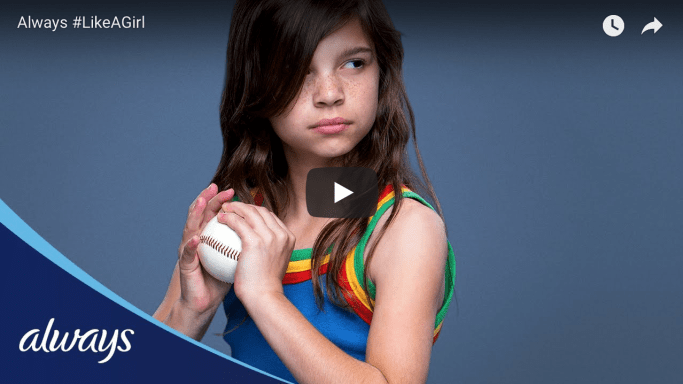
Case Study: Always #LikeAGirl

Always, the feminine hygiene company, has started a campaign with the hashtag #LikeAGirl rallying behind the young women their products support and trying to keep them in sports. Their website claims that many girls quit sports around the time of their on-set of puberty despite how much sports can be a positive influence on their confidence during this critical time.

Beneath this explanation on their website they have icons with four of the major social media sites Facebook, Twitter, Instagram, and YouTube. They are using social media to build their brand name, to build their reputation with consumers by showing they care beyond the scope of feminine products and spring into the lives of their young customers.

I looked into this campaign to see how the company is using this #LikeAGirl hashtag to engage with people and consumers specifically. I intend to look at each of those social media pages and see what kind of conversations are happening. This specific audience is very prevalent on these social sites so it will be interesting to see what is out there. I also think it is a smart long-game because some of these women targeted by this campaign will likely not be the one right now buying the products but they will grow and become the purchaser, and they could have daughters of their own that they buy for one day and which brand will they choose? Perhaps they will choose Always, the company seeking to help build confidence in young women.

The first link is the video of the original commercial that really launched the campaign. Below it are a powerpoint overview of the campaign and pdf of my case study.

Always #LikeAGirl

Case Study

Insta360 One Field Test: Women’s Rights National Historical Park #EMPJ

I decided that I wanted to test out a 360 degree camera as an effective tool in learning and consumer conversions. The latter meaning that as a story teller I could interest my viewers in the subject so much that they would want to visit the subject destination.

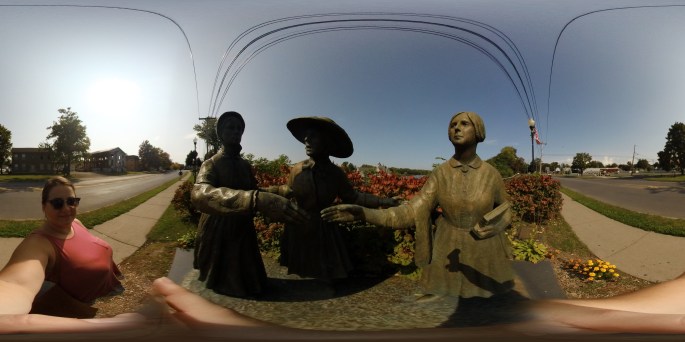
In order to do this I traveled to the Women’s Rights National Historical Park in Seneca Falls, New York. Once I was there I captured footage with the Insta360 One camera and took regular photos of the park in anticipation of testing my hypothesis.

Using the two types of media I created two different experiences for people to view. Each experience had its own survey with the same line of questions so I could try to test my hypothesis.

Ultimately, there has not been enough participation to make any definitive determinations on my hypothesis. However, I am confident that people have a strong interest in 360 degree content. Moreover, I found that this small group of people really ended up connected to the topic since 100% of the 360 degree video survey participants said they were interested in visiting the park if distance were not an issue. I’d be interested in seeing how consistent this figure remained if a larger scale of participants were to be surveyed.

Due to serious technological failures, the 360 degree videos are only available to view on my  Facebook Profile page. I have made those videos visible to the public so that anyone can view them.

Here is the photograph, or “traditional” experience.

You can read my full report on the field test in this white paper:  FIELD TEST_EMPJ_LEWIS_SAMANTHA

tempImageDataFile
This is a 360 degree still I took of a statue at the Women’s Rights National Historical Park.


Testing the Hypothesis; 360 Video Field Test

More to come on why the product is accessible in these ways, but for now I appreciate your flexibility in working with me. I decided it may be more helpful for me to have one web location to send people to when they are willing to participate in the testing of my hypothesis.

If you are a willing– or forced (thank you friends)– participant, please choose one of the following experience options: traditional, 360 experience, or both. Choosing both means that you will check out the traditional content first, answer the very short survey, check out the 360 video content, answer the very short survey,  and then find the survey under the “both” heading and answer the question there.

Traditional Experience 

Here is a small collection of images from Elizabeth Cady Stanton’s home. I ask that you view the presentation once, and do NOT go back and view it to answer any questions. No one will know your answers and cheating will only skew the comparative results. Please check out the short presentation from the underlined hypertext above in its entirety before filling out this survey: https://docs.google.com/forms/d/e/1FAIpQLSes01hUVYHChJLlIhxhKKhnc1Fm0ZrIhMlnNmPWiDCYC9O4xw/viewform?usp=sf_link

360 Video Experience

Here are two links to two seperate 360 degree videos. Please make sure the volume is loud enough for you to hear the sound; some voices may be hard to hear on lower volumes. Before taking the survey please watch both short clips one time each. See directions below if you need some guidance on watching 360 degree video.

If the videos do not work when you click the links, they are hosted on my Facebook page recently on my timeline and they have been listed as Public (Samantha Lewis; wearing sunglasses in profile picture and my contour was pretty excellent that day…). Upon some personal tests, you may need to be in the Facebook app on your mobile device for the video to work. If you could not locate the videos please proceed to the survey anyways. 

https://www.facebook.com/plugins/video.php?href=https%3A%2F%2Fwww.facebook.com%2Fsamantha.lewis.520900%2Fvideos%2F10212752373235776%2F&show_text=0&width=560“>Downstairs Footage (September 25 on Facebook)

https://www.facebook.com/plugins/video.php?href=https%3A%2F%2Fwww.facebook.com%2Fsamantha.lewis.520900%2Fvideos%2F10212815856822826%2F&show_text=0&width=560“>Upstairs Footage (October 4 on Facebook)

survey: https://docs.google.com/forms/d/e/1FAIpQLSdY9hgMGxbq1qAxxBVJMT3ciZ2d9nNJW55cwu9tXTet1yXYKg/viewform?usp=sf_link

[DIRECTIONS IF NEEDED] The best viewing option is to watch on your mobile device IN the Facebook app so that you may just move the device to look around the 360 degree video (up, down, and side to side or all around if you’re sitting on a swivel chair).  If you are watching from a desktop or laptop you will need to drag the video with your finger to explore the surroundings.

Both Experiences

After having followed all of the above steps and taken both of those surveys, now all that is left is to take this simple survey.  https://docs.google.com/forms/d/e/1FAIpQLSdBs8x2D1R_2AzKrJoCKIPw1WlOvTYIUfdBASMXusBPmnwWuw/viewform?usp=sf_link

Vision Paper Week 10 #EMPJ

Some people run to new technology with their arms wide open. Others are very distrustful of emerging technology. The latter might feel they are invasive to your privacy or too disruptive to your life. I think that their wariness is justified. Especially given how many people do become obsessed with their digital devices and how easy it is to use new technologies to purposefully or inadvertently capture private moments.

I think the pull between these two extremes will shape the future of technology. I’ve seen articles about companies implanting chips into employees and wonder how that fits into American society. While privacy is not strictly enumerated into our constitution, it is an important pillar of American values. I find it hard to believe that employers will go without lawyers getting involved eventually, if that is not already in the works. Discussing topics like these with other people, you’d find many people that would be extremely uncomfortable with having objects planted in their bodies. Additionally, privacy will continue to be an relevant issue because drones and 360 degree video enables someone to capture quite a tremendous view. That vast view from both will lend the ability to capture footage of people that may be unaware they’re being filmed or photographed. 

One thing I want to predict in our future is something that I truly hope can come to fruition. It may sound silly, but there should be classes that address digital media/devices starting in middle school (or earlier). While they are young we should be teaching children how to find balance in their lives. Technology is meant to aide our lives. It is meant to make us more organized. It is meant to help make us more productive. We should not let it cripple us and distract us from our daily tasks. Our society needs to reflect on how we can find an appropriate balance of living our lives and how much digital we mix in.

In the future there could easily be a Communications Etiquette class. In that class students could learn how to speak to each other in person and online. Teachers would be there to mediate as students acted out “verbal confrontations” and help them learn how it may be important to have certain conversations in person and how other conversations are fine for digital methods. This would also be a great class to show children what it looks like as a third-party person when people are perhaps over-sharing on social media. There seem to be unwritten rules that many people abide by but we’ve all seen our fair share of people that throw all caution to the wind and spill every last bean. This isn’t to say that the unwritten rules should become written, because this is a country that prides itself on the ability for its citizens to express themselves. If people still choose to share every single detail, that is their prerogative. However, it is important for children to learn how the internet works and how there are instances where over-sharing has gotten people in trouble with the law, or fired from their jobs. It seems like schools have shied way away from mobile devices and social media because it has gotten students into trouble. It is a mistake, though, to try to rid their school environment of these devices because we are creating a responsibility void. Let’s let the young adults learn how to appropriately use the technology. Let’s teach them how to be present in the moment and not so attached to the device that it is a disruption. There are so many great life lessons that could be taught through teaching young people how to interact with their devices. I already mentioned finding the balance (which would be another great course title), but another valuable life lesson as well: there is a time and a place for everything. Class time? You’re listening. Study hall and your homework is complete? Appropriate time to play a game or check your social media. There are much harsher lessons like accountability and consequences for their actions, that I’m sure districts would have to teach in the more unfortunate uses of technology, but frankly there seems to be a lack of accountability these days so I hope schools would welcome and take on the challenge. How are we supposed to grow and learn if we are not challenging ourselves or our children?

Lastly, and perhaps a little contradictory to my hope for balance, I see our future as having technology more integrated into our lives. I have had a vision of household appliances with glass surfaces being just another place you could get online. When I watched a specific episode of Black Mirror it was one of the most similar examples of what I would expect to see. For those that have never seen this Netflix original, a man woke up in a small square room. The walls were glass tiles that served as a large screen. When his alarm went off the tiles turned into a cute day scene and he was able to turn it off and the tiles would change. When he got out of bed and went to his sink, he could get information up on his mirror and he was able to buy toothpaste. This was a little different from what I envisioned because his glass was motion-sensor, and he did not need to touch the glass to click or move through his options. I pictured touch screen versions of this mirror coming and when you went to get ready in the morning you could pull up the news to watch right there on your mirror, or whatever you wanted to access on the internet. Motion sensors and their interfaces seem like they are developing sooner than I would have pictured so maybe Black Mirror was on to something.

Due to the resistance from some to wear certain technologies or trust technology I think that Augmented Reality is about to take off. I think that for now, while mobile devices might as well be another human appendage, AR is the place to take development. People can bring the augmented reality out when they want it to enhance their actual life and they can easily put it away (no bulky goggles necessary). I think that augmented reality is a part of having a balance between our physical lives and all things digital and digital media. Rather than stepping into an immersive but virtual reality, through AR people will be able to stay in their own reality but add in elements to enrich their experiences.

Drone Journalism in a Small Town Week 9 #EMPJ

Wide lens: a large and rolling field of corn stretches across your screen. Cut to a cow hanging out with 15-20 of her friends in a pen next to their barn. Enter the drone footage: fields of corn, fields of pumpkins, fields of beans, cow barns, egg farms, dairy barns, silos. Then you spot a house. As we continue flying toward the village at the center of town fields turn to homes and yards and small businesses and the school. All of a sudden there’s a big, ugly FastTrack being all red and obnoxious in the heart of our small farm town. To be fair, only its signs and branding are truly the source of an eye sore because the building itself actually looks quite nice.  Across the street sits the much smaller, abandoned cash-only gas station that used supply residents and travelers.

Okay, so that has the potential for some nice imagery but its not exactly a riveting news story that could be better told through the use of drones in journalism.

Currently, there are some stories developing in my little community but not many of them would be good candidates for a drone angle. However, one thing does come to mind at this time of year.

Football.

Much of the news-worthy stories around here are things related to the school and its involvement in the community. And since people love sports and right now we are in the midst of football season, it seems to be just the kind of story to test out the drones. It would be particularly nice given my high school alma mater just got a new turf field. I think that using drones to connect the community with our football team and the other sports teams for that matter, would be a good use of the drones’ capabilities.

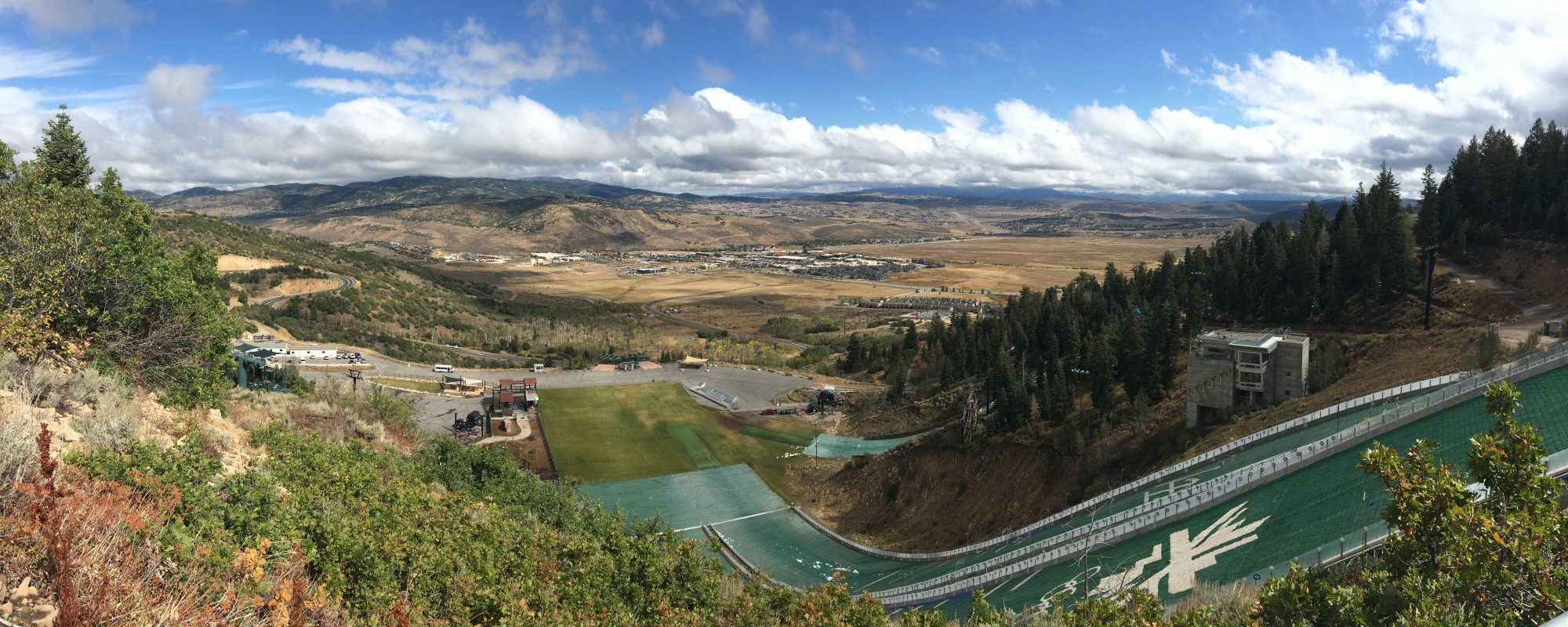
Using a drone we could create a content series for the school called Friday Night Live Lights, or something maybe more clever. Each Friday night the drone goes up and catches the game. Logistically, depending on the model, you may need to bring more than one or extra batteries since games can run long. I have seen people use the Facebook live feature using their drone so I think that would be such a cool way to utilize live streams and drones together to share our local sports stories.

I think as the season went on, you would learn the best way to approach streaming the game, whether it was totally continuous or if you took breaks after each quarter or just at half time, etc. I know that during every time out and/or at the end of quarters I would leave the drone facing the score board. When possible I would place the drone so that the score board and the game were both visible.

Field Test Week 8 #EMPJ

The purpose of our field test is to use one of these emerging technologies we have learned about in our classes, or perhaps elsewhere, and solve a problem. I had been struggling with this project for a number of reasons until last week. During the weekly exposure to new technology I kept thinking, “now this is what I want to try out.” Then I was also pondering about the whole problem solving aspect. What audience out there in the world had a problem in media that I could solve? Where are they and how could I help them?

Then last week as I was headed up to the Adirondacks with my dad and my little sister it dawned on me mid-conversation: better campsite imaging. For those that are pro’s they know right where to go online and they know exactly which sites they want to go to since they return to the same campgrounds annually. However, if you are new to camping or are someone who likes to explore new campgrounds, my idea may just help you plan your next trip with precision. Right now when people plan their trips they are booking blind on most sites. I’ve tried getting around the lack of pictures by going to Google Earth and zooming in but most of these properties are not visible through the trees.

I have been mulling around a couple different ways to tackle this project, which is fine as we need to have back-ups plans.

Using a 3D sensor or photogrammetry I could gather the imaging/data necessary to recreate a campsite in VR. Ideally, each site would eventually be done and hosted on the same site that people book their trips from. This way, people will know exactly what to expect before their trip and what extra equipment may or may not be necessary. When people search for sites that meet their date preferences or site preferences a cartoon map comes up. At the very least, once they click on a potential site and all of its information comes up, this is where a 360/VR experience of the single site could be located. I would annotate the site with dimensions for crystal clear expectations. I am thinking this part of the project will be dependent on the number of sites that are empty, as it would make more sense to let campers see the full space they are working with. 

Using a 360 camera I could walk, or drive through the campgrounds for a virtual reality tour. Depending on the size of the campgrounds, it may be necessary to drive for battery life. I am still reading about my options as far as merging these two ideas together. My thoughts are that it would be most beneficial for people to be able to go in to the campground’s VR and click on their site number or zoom in on their site and there they will see the annotations I mentioned above. If the 360 video ends up being a stand-alone piece it would be annotated to include street names and site numbers.

I am looking forward to hearing back from the campgrounds I have reached out to and trying to put together such an informative campground resource.

Using Sensors to test Conspiracy #EMPJ Week 7

In our class this week we learned about the use of various sensors that journalists, regular citizens and scientists alike have been employing to check on the powers that be, or to conduct their own experiments. For whatever reason, when asked to apply the idea of sensors with story telling my mind went straight to climate change.

If you frequent the documentaries on Netflix as I occasionally do, perhaps you have also watched the one titled Cowspiracy. The premise behind this documentary is that we’ve all been only told a half-truth about climate change. The normal discourse usually involves some derivative of “monitor your carbon foot-print” and “consider car pooling, walking or cycling to your destination if possible” all in the efforts to decrease our combined carbon emissions into our atmosphere. The ultimate aim is to not mess with our ozone and ruin the green house effect which is what keeps us all nice and comfortably toasty here on Earth.

However, the documentary strays from this typical dialogue and adds that one of the worst contributors of greenhouse gases is actually farms that raise livestock. If their data is accurate the difference between carbon emissions from our transportation and the green house gas emissions from livestock farms is quite considerable. If you don’t feel like watching their documentary, here is an infographic they have made to sum up their concern.

I think that this could be just one way to get people involved in the climate change discussion. I could use a sensor like the hazardous gas monitor to gather my own data to use in a story on the gas emissions by our local farms. The sensor could be taken into the city where you could get readings in what we would suspect to be higher levels of carbon emissions due to the increased transport taking place. I could take it to the suburbs where the area is largely residential and likely to produce mild gas levels. Lastly, in what could be either debunking the con[cow]spiracy or being one more person able to produce similar results, I could bring it to a few of the local farms that have livestock and collect date there. It may also be interesting to bring it to a farm that does not raise animals and see if there is a difference in data there. What could result from this is a look at the gas levels along a radius from the center of the city out to one of its most rural towns. The story would be a take on our local impact on climate change and how our area fits into the issue.

Although, I think that given the split nature of the climate change issue among Americans that perhaps another approach could be useful. Borrowing from idea of the Cicada Tracker project where people were involved in collecting the data themselves and then watching it become a part of a data set online might be a more appropriate approach to help Americans learn about climate change and trust the data that is being collected. Setting up a website that helps instruct people about how they can get and construct their own gas sensors and then have their data contribute to the site’s data collection could be a way to get everyone involved. For those indifferent or those that don’t believe we are contributing to the changing of our atmosphere, this project could feel like a way for them to help “debunk the conspiracy.” In order for that project to work with as little manipulation as possible, my dream sensor for the project would have a GPS tracking device attached so that the data was automatically associated with its actual location as well as a video camera to confirm that the sensor was not being placed in a place that would obviously skew the results, such as a grill or at the end of a muffler.

VR Project Pitch: Solar Eclipse Week 6 #EMPJ

This week we have been tasked to pick a news story that could utilize Virtual Reality and 3D Web technology. The story I would like to tell using these innovations would be about the solar eclipse. Not only has this been a prevalent story everywhere you turn, but I think it could have great applications as far as this technology goes. Using these methods would also set you apart from the standard articles giving path estimations and explaining how to view the eclipse without burning your retinas.

I think that the virtual reality portion of this story comes after the eclipse has occurred. I have seen that organizations like NASA are gearing up for this event and plan on live streaming it. There will be plenty of images that could be used to recreate this event. What I think would be really cool, is to pick one location that is going to experience the full eclipse and have the place recreated at the peak eclipse time. This way people that either missed it or were not in a location that was in the path of the full eclipse, could still experience what it would be like to walk around outside. Could 360 video lend itself to this story? Sure, but I thought I saw somewhere that not all cameras are suitable for capturing this solar event and that equipment’s light sensors could be affected from repeated exposure. I wouldn’t want to sacrifice my gear. Instead, I could use the footage from the NASA live streams, people who are more equipped to record such an event, to recreate one of the locations in VR where all of the equipment is definitely safe from damage. I believe I saw that they would have locations across the country set up and that they would be following its path across the country. This would also give us options as far as which location we wanted to recreate. I am not sure how this part would work, but maybe the eclipse in the VR is safer to view? Since it is artificial the bright light ring around the moon could be dimmed for safety or since it is not actual rays the intensity/brightness could still be accurate but safe to view in VR? Again, these would be logistics I am unsure of.  I’d need to research or contact someone much smarter than myself to get the answers to because I would want it to be as accurate as possible but obviously safe to view.

The 3D web portion of this story I think is a little easier to apply and would replace all the infographics we have seen about the path of the eclipse. With inspiration from The WebGL Globe from the Chrome Experiments, I thought it would have been a much more visually appealing and stimulating way to explore the path of the eclipse. There could be a color gradient associated with view percentages and the path could have been drawn with the respective colors. This would have allowed viewers to search their location and see where they were in relation to the path right on the globe. Such a representation would also allow for people to move the Earth and follow the entire path of the solar eclipse.

Reality Capture Week 5 #EMPJ

I am not going to lie, this week I am having a harder time thinking of how I would apply the technology we discussed in class, to creating stories. Reality Capture certainly lends an amazing ability to replicate a landscape, an object, or a person, but as far as it being the mechanism solely through which I told a story, I would need to experiment with it more. That being said, I think that reality capture is a great way to add to a written story. I know both as a writer and a reader that words do not always have the ability to capture what we see through our own eyes. Especially for those that are visual learners, seeing something for yourself is the difference between a cursory understanding and a deep understanding.

This reality capture technology seems like it would be great for educational purposes. Instead of sitting in a class hearing lectures or just taking notes, I can’t imagine what it would’ve been like to instead maybe have an iPad in hand, and as the teacher guided you through the historic place telling you what happened there, you could simultaneously be exploring it and envisioning the historic event in a contextual setting. Pictures and videos can’t give certain situations justice when you’re considering that landscapes change or how the reality capture gives a better sense of depth and distance.

With such a brief experience with it, so far, I think that the ability to use the reality capture to then create files that can be used in Unity3D is where I would pursue its benefit to story telling. Rather than trying to find assets that others have made that are close to what you need, you can use 3D scanning to capture things in our physical world and bring them into virtual reality. This helps to recreate the physical setting of whatever story you’re trying to tell so that your audience can be immersed in an event they did not partake in, or explore a place for better understanding.

My goal, no matter how I am telling the story, is to bring people information that I feel is important. No matter my hypothesis for testing this technology out in a field test, my measurement for success remains the same. How do people feel about the subject of my story? Was the element of the reality capture lending to a better understanding of the story? Did it help the audience better empathize with the story? I think that it would be interesting to tell a group of people the same story using two different deliveries. You can use a more simple, or traditional means of story telling as a control group. I would compare their reactions to the two different stories and see how the answers to the questions above compared to each other.

360 Video Potential #EMPJ Week 4

There is already some pretty great content out there for story consumers via 360 video. This week we took some time to learn a little bit about the process of creating 360 videos and considered the ethical concerns they raise. One of the concerns is “staging” because the equipment has to be set up and then walked away from and some go as far as to hide so they don’t interfere with the scene. I see why this is problematic for some people.

There is already so much distrust for media as it is, it doesn’t seem like a good idea to employ story telling tactics that could be construed as deceitful. That being said, I don’t think that makes 360 video an impossible candidate for journalistic story telling. As others are tackling these issues, my classmates and I will be a part of exploring and defining the practiced boundaries in ethics should we pursue 360 video as an avenue of story telling.

360 degree video lends itself to telling stories in which you don’t want to leave anything out. It allows you as the story teller to drop your audience within the setting of your story. Right now, while people wrestle with putting sensitive images within 360 video and whether or not it makes our audience more empathetic or more desensitized, I think the greatest opportunity is just letting people see the world.

The world is so incredibly vast. My travels have humbled me and slowed me down quite a bit. I like to stop and take a look around. I take everything in and try to remember all the details so I can come back to that moment later. I got my strong yearning for travel from my grandmother. She has always had many stories of the places she has been and the people she met while she was there. Now that she is older she can’t quite travel like she used to and she lives vicariously through those of us that are able to travel. She is likely the first to traverse my Facebook albums, my Instagram posts and my snapchat story, at least when she knows I am traveling. And yes, my grandma has and uses Instagram and SnapChat. She is ~hip~.

Old age is not the only thing that holds people back from getting to see the world and listen to the stories that happened in whichever foreign place was the destination. I’d love to use 360 video to show different places all over the world. While I travelled in Europe , there was a company that I came across that did tours for only a donation. As I travelled from city to city we looked for those tours. In my mind I picture a tour guide like that, bringing you around a place and telling you the story right where it happened. Just like I did, viewers have the chance to look around. They choose where to look and what to see right from where they are.

I think that this basic concept would make for a relatively simple field test. The goal of these travel pieces would be to bring you closer to another place, hopefully one that the viewer didn’t know much about before. The phrase ‘out of site out of mind’ came from somewhere so the bigger picture is to close the gap between them and us, and make people empathetic again. I could create a simple quiz or survey about the place of choice and see how people feel before and after watching the piece. The responses to the quiz/survey would be how I determined my success. Did people leave the experience having learned something about a new place? Have I created at least a small connection for them to this new place?